





New batch starts 24-Aug-2026

Master Program in
Cyber Security Ethical Hacking · VAPT · Red Team · SOC Ops

  • Master Cyber Security, Ethical Hacking, VAPT, Red Teaming and SOC Analyst Skills
  • Learn Linux, Networking, Ethical Hacking, Penetration Testing, SIEM & SOC, Cloud Security, Red Teaming, Vulnerability Assessment, Threat Intelligence and Incident Response.
  • Hands-on projects, internship opportunities and placement-focused mentorship.
  • Live instructor led training
  • For Professionals, College freshers, Candidates with a career gap and Career changers.
  • No prior coding experience required, all prerequisites will be covered.
🛠️ Get Hands-on With Industry-Standard Tools (15+ Tools Covered)
Burp Suite
Metasploit
Nmap
Splunk
Wazuh
Kali Linux
6mo
Duration
460+
Practical Hrs
10
Modules
100%
Placement SUPPORT
🔒 No spam. Free counseling session — no obligation.

Start Your Application.

Book Free Career Counseling
Speak with our advisor — batch details, fees & career path
🔒 100% private. No spam. No obligations.
🖥️ Live Training Instructor-Led 🧪 Hands-on Labs 100+ Practicals 🎯 Enterprise Capstone Project 📊 SIEM Tools Splunk · ELK · Wazuh · LogRhythm 💼 100% Placement Support 📍 Online + Classroom
🖥️ Live Training Instructor-Led 🧪 Hands-on Labs 100+ Practicals 🎯 Enterprise Capstone Project 📊 SIEM Tools Splunk · ELK · Wazuh · LogRhythm 💼 Career Support Resume to Offer 📍 Online + Classroom

📅 NEXT BATCH

24-Aug-2026

📍 LOCATION

Shivaji Nagar, Pune

⏱️ PROGRAM DURATION

6 Months

🧑‍💻 LEARNING MODE

Classroom/Hybrid

THE SECURITY SKILLS GAP

Cybersecurity is the Fastest Growing Tech Career of the Decade

Every organisation — from banks to hospitals to startups — is under constant attack. Skilled security engineers are in massive demand, and supply can’t keep up.

4.8M+

cyber security jobs sit unfilled worldwide right now2 in 3 organisations are understaffed on security. Trained & skilled professionals are hired faster than any other tech role.

29%

Projected job growth

Security analyst roles are set to grow ~29% through 2034 — several times the average across all careers.

3.5M

Open roles in Asia-Pacific

The largest regional talent gap on the planet — right on India’s doorstep.

₹3–8 LPA

Fresher starting salary

Typical first package in India, rising fast as you specialise in cloud & SOC.

↑33%

More openings, year on year

Cyber security hiring in India jumped roughly a third from 2025 to 2026.

Sources: ISC2 Cybersecurity Workforce Study (2025), World Economic Forum, U.S. BLS occupational projections, NASSCOM–DSCI and 2026 Indian salary data.

The Reality Check

Cybersecurity Jobs Need More Than CEH Theory

Most students learn basic ethical hacking concepts but struggle in interviews because they lack real-world exposure to logs, SIEM tools, cloud security, incident response, reporting and enterprise attack simulations. A certificate proves you can pass an exam but employers hire for what you can actually do at the keyboard — on real tools, against real targets. That’s exactly how we train.

This program bridges the gap between learning cybersecurity and becoming genuinely job-ready — with real tools, real labs, and a real enterprise cyber range capstone.
DEFENCE STARTS WITH KNOWLEDGE

83%

of cyber security roles explicitly require hands-on experience — regardless of seniority.

75%

of junior roles demand it too — a certificate alone won’t get you shortlisted.

ABOUT THE PROGRAM

Master Program in Cyber Security

Master Program in Cyber Security by BinaryBrains is a 6-month industry-focused Cyber Security training program designed to build job-ready professionals through hands-on learning.
Go beyond theory — Master Networking, Linux, Ethical Hacking, and Network & Web App Penetration Testing using real industry tools like Kali Linux, Burp Suite, Metasploit and Nmap. Advance into Cloud Security, SOC Operations and InfoSec compliance, then put it all to the test in a live Enterprise Cyber Range capstone simulation.
With 460+ training hours, 100+ labs, real-world VAPT projects, and dedicated placement support (resume, mock interviews, career mentoring), graduate job-ready with a portfolio that proves your expertise to employers."

Program Highlights
📐

Career-Focused Curriculum

From Networking and Linux fundamentals to Ethical Hacking, VAPT, and Web Application Security in one structured program.
🛠️

15+ Industry-Standard Tools

Burp Suite, Metasploit, Splunk, Wazuh, Nmap, Mimikatz, BloodHound and more — the same stack used in real SOCs.
🧪

70% Hands-On Practical Labs

Theory stays minimal. Practice in live cyber security labs with attack simulations, Capture The Flag (CTF) challenges, and real-world security scenarios.
⚔️

Real VAPT Projects

Discover, analyze, and exploit Network & OWASP Top vulnerabilities in enterprise-like lab environments.
📋

Create Professional VAPT Reports

Learn to document vulnerabilities, assess risks, and prepare industry-standard Vulnerability Assessment & Penetration Testing reports.
💼

Zero to Job-Ready

Learn Cyber Security from the fundamentals with no prior experience required. Every module is mapped to what SOC analysts, VAPT engineers and Red Teamers actually do on day one.
STRUCTURED LEARNING

Foundation → Intermediate → Advanced

A structured 3-phase Cyber Security curriculum — Foundation, Intermediate and Advanced — that takes complete beginners from zero to job-ready. Master Ethical Hacking, Networking, Linux and Penetration Testing step-by-step through hands-on labs, with no prior security experience needed to get started.

PHASE 1 • FOUNDATION

Build Strong Technical Basics

Internet, networking, Linux, Python and ethical hacking fundamentals before any offensive or defensive technique.

  • Python Fundamentals
  • Networking — OSI, TCP/IP, Protocols, DNS
  • Linux Administration - RHCSA
  • CEH v13 — Ethical Hacking Fundamentals
PHASE 2 • INTERMEDIATE

Real-World VAPT & Cloud Security

Move into real-world vulnerability assessment, network security, web application security and cloud security.

  • Network Penetration Testing — Nmap, Metasploit
  • Web Application Penetration Testing — SQLMap, BurpSuite
  • Cloud Security — AWS IAM, EC2, S3
PHASE 3 • ADVANCED

Red Team , Blue Team, GRC & Cyber Range

Practice Red Team, Blue Team, GRC and enterprise cyber range simulations — the final test of real-world readiness.

  • Red Team — Advanced Exploitation (C2, AD)
  • SOC Operations — Splunk, ELK, Wazuh
  • InfoSec & Compliance — ISO 27001, GDPR, PCI-DSS
  • Enterprise Cyber Range Labs
PHASE 0

Cybersecurity Readiness Bootcamp

Before students enter advanced topics, we build core technical understanding and the problem-solving mindset that separates good analysts from great ones.

How the Internet Works

Websites, DNS, IP addresses, HTTP/HTTPS and client-server communication — the foundation of every network attack.

What is an Attack Surface

How attackers identify exposed systems, applications, users and cloud assets before launching an attack.

What is a Security Log

Understanding logs, security events and how analysts detect suspicious activity — the backbone of SOC work.

Authentication Basics

Passwords, MFA, sessions, identity, authentication and authorization — before you can attack or defend it, you must understand it.

Virtualization Basics

Virtual machines, hypervisors, VMware, VirtualBox and lab setup — so every student hits the ground running from Day 1.

Troubleshooting Mindset

Analyst thinking, root-cause analysis and structured problem-solving — the difference between a junior and a senior security professional.

FULL CURRICULUM

What You Will Learn

10 modules · 460 hours · 6 months — every domain from foundation to enterprise cyber range.

MODULE 01 · FOUNDATION

Python Fundamentals

1 Week · 10 Hrs · VS Code · Jupyter
  • Syntax, Data Structures & OOP
  • File Handling & Error Management
  • Libraries — os, sys, re, requests
  • Shell Scripting & Automation

MODULE 02 · FOUNDATION

Networking Fundamentals

2 Weeks · 40 Hrs · Wireshark · GNS3
  • OSI & TCP/IP Models — all layers
  • Routing, Switching, IP Addressing, Subnetting, CIDR
  • DNS, SSL/TLS, Ports & Protocols
  • Load Balancing & Fault Tolerance

MODULE 03 · FOUNDATION

Linux (RHCSA) for Security

2 Weeks · 40 Hrs · Kali · Ubuntu
  • File System, Permissions, chmod
  • grep, awk, sed, cut — text filters
  • User Management & Processes
  • Bash Shell Scripting & Logs

MODULE 04 · FOUNDATION

Ethical Hacking — CEH v13

2 Weeks · 40 Hrs · 20 Domains
  • Footprinting, OSINT & Scanning
  • System Hacking & Malware
  • DoS, Session Hijacking, Sniffing
  • IoT, Mobile, Cloud & Crypto

MODULE 05 · VAPT

Network Penetration Testing

3 Weeks · 60 Hrs · Metasploit · Nessus
  • OSINT, Nmap, Active Recon
  • Metasploit — Payloads & Shells
  • MITM — ARP/DNS Spoofing, Responder
  • Wi-Fi — WPA2 Cracking, Evil Twin

MODULE 06 · VAPT

Web Application Pentesting

3 Weeks · 60 Hrs · Burp Suite · OWASP
  • SQLi, XSS, CSRF, IDOR
  • File Upload, LFI, Dir Traversal
  • API Security — JWT, Broken Auth
  • SSRF, Fuzzing, Vuln Chaining

MODULE 07 · Cloud Security

Cloud Security — AWS

2 Weeks · 40 Hrs · 7 Sub-Modules
  • IAM Abuse — Enum, PrivEsc, Persistence
  • EC2 IMDS, Lambda, DynamoDB, S3
  • API Gateway — Broken Auth, CORS
  • Pacu, CloudGoat, ScoutSuite, Prowler

MODULE 08 · Red Team

Red Team & Advanced Exploitation

3 Weeks · 60 Hrs · C2 · BloodHound
  • C2 Frameworks — Sliver, Covenant
  • Active Directory — Kerberoasting, DCSync
  • Lateral Movement, Persistence, Evasion
  • MITRE ATT&CK Report & TTPs

MODULE 09 · Blue Team

Security Operations Center

3 Weeks · 60 Hrs · 4 SIEM Platforms
  • Splunk SPL · ELK KQL · Wazuh FIM
  • LogRhythm UEBA & Case Management
  • Snort IDS · Threat Hunting · DFIR
  • Full-Day SOC Capstone Simulation

MODULE 10 · GRC

InfoSec & Compliance

2 Weeks · 40 Hrs · ISO · GDPR · PCI
  • ISO 27001:2022 — ISMS, Clauses 4–10
  • Risk Register, SoA, Mock Audit
  • GDPR — DPIA, Breach Notification
  • PCI-DSS — 12 Requirements, SAQ

FINAL CAPSTONE PROJECT

Enterprise Cyber Range — Final Simulation

3 Weeks · 21 Vuln Classes · Live SOC
  • Recon → Web Exploit → AD Takeover
  • Live Wazuh SOC monitoring every move
  • DCSync → Golden Ticket → Domain Admin
  • CVSS v3.1 Report + Full Debrief
FULL TOPIC BREAKDOWN

Explore Every Module in Detail

Click any module to expand the full topic list, hands-on exercises and skills you will gain.

01

Python Fundamentals

☰ 1 Week · 10 Hrs
FOUNDATION
The language of security automation and exploit scripting. A solid coding foundation before any offensive or defensive technique is introduced.
  • Introduction to Python & Basic Syntax
  • Data Structures — Lists, Dicts, Sets
  • File Handling & I/O Operations
  • OOP Basics — Classes & Objects
  • Libraries — os, sys, re, requests
  • Operators & Control Flow (if, loops)
  • Functions & Scope Management
  • Error & Exception Handling
  • List Comprehension & Lambda
⬇ Download Full Syllabus
02

Networking Fundamentals

☰ 2 Weeks · 40 Hrs
FOUNDATION
Build deep networking intuition — the foundation for every attack and defense technique. Understand how data flows, gets routed, and can be intercepted.
  • OSI Model — all 7 layers with examples
  • Devices — Hub, Switch, Router, Firewall
  • IP Addressing — IPv4, Public/Private, DHCP
  • DNS — Root, TLD, A/MX/PTR Records
  • Load Balancing, HA & Fault Tolerance
  • TCP/IP Model & Protocol Stack
  • Protocols — SSH, RDP, FTP, DNS, HTTP/S
  • Subnet Mask, CIDR & Subnetting
  • Ports, SSL/TLS & Encryption Basics
  • Network Topologies — Star, Mesh
⬇ Download Full Syllabus
03

Linux for Security

☰ 2 Weeks · 40 Hrs
FOUNDATION
Linux is the foundation of modern Cyber Security. Ethical Hackers, Penetration Testers, and SOC Analysts rely on Linux to perform security assessments, automate tasks, analyze threats, and operate industry-standard security tools in real-world environments.
  • Linux Concepts — Unix vs Linux, Distros
  • File System — pwd, cd, ls, find, links
  • File Permissions — chmod, chown, chgrp
  • User Management & Sudoers
  • Logs — syslog, auth.log, journalctl
  • VMware Setup & VM Configuration
  • SSH via MobaXterm, ip & ss commands
  • Filters — grep, awk, sed, cut, sort
  • Processes — ps, top, kill, crontab
  • Shell Scripting — Bash & Automation
⬇ Download Full Syllabus
04

Ethical Hacking — CEH v13

☰ 2 Weeks · 40 Hrs
FOUNDATION
Aligned with EC-Council's CEH v13 framework across 20 domains — from OSINT and scanning to cloud exploitation and cryptography.
  • Intro & MITRE ATT&CK
  • Enumeration (LDAP, SNMP)
  • Malware Threats & APTs
  • DoS / DDoS Attacks
  • Web, Apps & SQLi
  • IoT & OT Hacking
  • Footprinting & OSINT
  • Vulnerability Analysis
  • Sniffing & Wiretapping
  • Session Hijacking
  • Wireless — WEP/WPA/WPA2
  • Cloud Security
  • Scanning — Nmap
  • System Hacking & Priv Esc
  • Social Engineering
  • Evading IDS, Firewalls
  • Mobile Security
  • Cryptography & PKI
⬇ Download Full Syllabus
05

Network Penetration Testing

☰ 3 Weeks · 60 Hrs
VAPT
Full-scope pentest lifecycle — scoping, OSINT, active recon, exploitation, post-exploitation, pivoting, Wi-Fi attacks and professional report writing using real tools.

FOUNDATIONS TO EXPLOITATION

  • Pentest Types — Black/White/Grey Box & RoE
  • Lab Setup — Kali, Metasploitable, VulnHub
  • Active Recon — Nmap, Masscan, Netdiscover
  • Networking Basics for Pentesting
  • Passive Recon — OSINT, WHOIS, Shodan, Dorks
  • VA — Nessus, OpenVAS, CVSS Prioritization

POST-EXPLOITATION TO REPORT

  • Exploiting FTP, SMB, Telnet, RDP, SSH Misconfigs
  • Privilege Escalation — Windows & Linux
  • MITM — ARP/DNS Spoofing, SSL Stripping
  • Wi-Fi — WPA2 Handshake Capture & Cracking
  • Executive + Technical Report Writing
  • Metasploit Framework — Payloads & Shells
  • Credential Dumping — Mimikatz, John, Hashcat
  • Ettercap, Bettercap, Responder
  • Rogue AP & Evil Twin Attacks
  • Risk Prioritization & Stakeholder Comms
⬇ Download Full Syllabus
06

Web Application Penetration Testing

☰ 3 Weeks · 60 Hrs
VAPT
OWASP-Aligned — every session introduces a vulnerability class then immediately exploits it in a live lab. Full professional pentest simulation with report writing.

SETUP, RECON & CORE VULNERABILITIES

  • Lab Setup — DVWA, Juice Shop, Burp Suite
  • Web Architecture, APIs, Auth vs Authz
  • Authentication Attacks & Brute Force
  • SQL Injection Part 2 — Blind, Boolean, SQLMap
  • HTTP/S, Request/Response, Sessions, Cookies
  • Recon — Dir Busting, robots.txt, JS Analysis
  • SQL Injection Part 1 — Error-based, Auth Bypass
  • XSS — Reflected, Stored, DOM XSS

ADVANCED ATTACKS & FINAL SIMULATION

  • CSRF & Session Attacks — Token Bypass
  • IDOR & Access Control Flaws
  • SSRF, Open Redirect, Host Header Injection
  • Full Pentest Simulation — Recon → Exploit → Escalate → Professional Report Submission
  • File Upload Bypass, Dir Traversal, LFI
  • API Security — JWT Attacks, Broken Auth
  • Fuzzing, Race Conditions, Vuln Chaining
⬇ Download Full Syllabus
07

Cloud Security — AWS Attack & Defense

☰ 2 Weeks · 40 Hrs
CLOUD SECURITY
Hands-on offensive & defensive AWS. Students attack misconfigured cloud environments then detect and defend those same vulnerabilities — mirroring real cloud security engagements across IAM, EC2, Lambda, S3, DynamoDB and API Gateway.

AWS Foundations

  • IaaS, PaaS, SaaS — security implications
  • AWS Global Infrastructure — Regions, AZs, Edge
  • AWS Shared Responsibility Model
  • AWS CLI installation, configuration & credentials
  • Core services — EC2, S3, IAM, Lambda, RDS, DynamoDB
  • AWS Security Hub & CloudTrail — audit logging
  • Lab: Deploy first EC2, explore console & CLI

IAM Security

  • IAM — Users, Groups, Roles, Policies, SCPs
  • Principle of Least Privilege — real-world failures
  • IAM Enumeration techniques
  • IAM Abuse — Initial Access
  • IAM Abuse — Privilege Escalation
  • IAM Abuse — Persistence & Credential Access

EC2 Exploitation

  • Security Groups, NACLs & VPC Architecture
  • IMDSv1 vs IMDSv2 — SSRF Attack & Defense
  • EC2 Enumeration & Initial Access
  • EC2 Privilege Escalation & Persistence
  • EC2 Credential Access techniques

API Gateway

  • REST, HTTP, WebSocket API architecture
  • Auth mechanisms — API Keys, IAM, Cognito
  • API Enumeration — discover endpoints
  • Broken Auth — bypass API keys
  • Overpermissive CORS & Rate Limiting Abuse
  • Defense Testing — implement logging bypass

Lambda (Serverless)

  • Serverless architecture — execution model, cold starts
  • Lambda IAM roles — over-permissioned functions
  • Lambda Enumeration & Initial Access
  • Lambda Credential Access Techniques
  • Lambda Privilege Escalation & Persistence

DynamoDB Security

  • DynamoDB architecture — Tables, Items, Indexes
  • Access control — resource policies & IAM conditions
  • DynamoDB Enumeration & Unauthorized Access
  • Data Extraction & Chaining Attacks

S3 Misconfigurations

  • S3 Buckets, Objects, ACLs, Bucket Policies, CORS
  • S3 Enumeration techniques
  • S3 Data Exfiltration methods
  • S3 Remediation & Secure Configuration

Labs & Offensive Tools

  • Pacu — AWS exploitation framework
  • CloudGoat — vulnerable-by-design AWS labs
  • ScoutSuite — cloud security audit tool
  • Prowler — CIS benchmark compliance checks
  • AWS Free Tier + LocalStack for offline practice

Detection & Cert Alignment

  • AWS GuardDuty — threat detection
  • AWS Security Hub — centralised findings
  • CloudTrail — API audit logging & forensics
Cert Alignment:
AWS Security Specialty · AWS Solutions Architect · CompTIA Cloud+
⬇ Download Full Syllabus
08

Red Team & Advanced Exploitation

☰ 3 Weeks · 60 Hrs
RED TEAM
End-to-end red team operations following real adversary TTPs — from initial access and C2 deployment to Active Directory takeover, lateral movement, data exfiltration and red team reporting. OPSEC-aware throughout.
    Initial Access & C2
  • Red Team Introduction & OPSEC Mindset
  • Red Team vs Pentest — Methodology & Scoping
  • Initial Access — Phishing & Payload Delivery
  • Spear Phishing, Macros, Malicious Attachments
  • Delivery Chain Design & Evasion Basics
  • Weaponization — AV/EDR Bypass Techniques
  • AMSI Bypass & PowerShell Restrictions Evasion
  • Custom Payload Obfuscation
  • Command & Control (C2) Frameworks
  • Sliver C2, Metasploit — Setup & Operation
  • C2 Channels — HTTP, DNS, HTTPS Beaconing
    Escalation & Lateral Movement
  • Privilege Escalation — Windows Techniques
  • Privilege Escalation — Linux SUID, sudo Abuse
  • Credential Dumping — Mimikatz & LSASS
  • SAM Database & NTDS.dit Extraction
  • Cracking & Reusing Captured Credentials
  • Active Directory Attacks — Kerberoasting
  • Pass-the-Hash & Pass-the-Ticket (PTH/PTT)
  • DCSync Attack — Extracting Domain Hashes
  • BloodHound — AD Attack Path Discovery
  • Rubeus — Kerberos Ticket Manipulation
  • Lateral Movement — PsExec, WMI, PSRemoting
  • SMB Relay Attacks & NTLM Capture
  • Pivoting — SSH Tunnels & Port Forwarding
    Persistence, Evasion & Reporting
  • Persistence — Registry, Scheduled Tasks
  • Startup Folder Abuse & DLL Hijacking
  • WMI Subscriptions for Persistent Access
  • Data Exfiltration Techniques
  • DNS Exfiltration & HTTPS Covert Channels
  • Staged Exfil to Avoid Detection
  • Defense Evasion — LOLBins & LotL
  • Log Clearing, Timestomping, Process Injection
  • EDR Evasion & OPSEC Countermeasures
  • Red Team Report Writing (Executive & Technical)
  • MITRE ATT&CK Mapping of All TTPs Used
⬇ Download Full Syllabus
09

Security Operations Center (SOC)

☰ 3 Weeks · 60 Hrs
SOC
The most comprehensive SOC module available — students operate Splunk, ELK, Wazuh and LogRhythm, write Snort rules, perform threat hunting.

SOC Foundations

  • CIA Triad, SOC roles & Tier 1/2/3 escalation paths
  • SOC types — in-house, MSSP, hybrid
  • Lab: Setting up SOC lab environment
  • OSI, TCP/IP, Wireshark packet capture for SOC
  • Key protocols, Firewalls, Proxies & Port mapping
  • Windows Event Logs — structure, channels, key IDs
  • Linux logs — /var/log, syslog, auth.log, kern.log
  • Active Directory basics for SOC analysts
  • MITRE ATT&CK — tactics, techniques, procedures
  • IoCs vs IoAs, Threat Intelligence feeds
  • SIEM architecture — ingestion, correlation, alerting
  • Splunk & ELK overview — onboarding sample logs

SIEM Deep Dive

  • Splunk Architecture — indexers, search heads, forwarders
  • SPL — search, stats, eval, rex, timechart, table
  • Dashboards, Correlation Searches & Alerts
  • Lab: Detecting brute-force & lateral movement via SPL
  • ELK — Elasticsearch, Logstash, Kibana, Beats
  • KQL — Kibana Query Language for threat hunting
  • Creating detection rules in Kibana SIEM
  • Lab: Kibana security dashboard from Windows logs
  • Wazuh — manager, agents, indexer, dashboard
  • FIM, Vulnerability Detection, Active Response
  • Lab: Detecting unauthorised file changes & failed logins
  • LogRhythm — UEBA, AI Engine rules, Case Management
  • SmartResponse automation & Threat Intelligence
  • Snort — rule syntax, header, options, actions
  • Lab: Snort rules for port scans, SQLi, reverse shells

Advanced SOC Operations

  • NIST IR Lifecycle — all 6 phases
  • Alert Triage — True vs False Positive
  • Evidence collection & chain of custody
  • Lab: Triage & classify 10 simulated alerts
  • Memory, Disk & Network Forensics
  • Windows Artifacts — Prefetch, MFT, Registry
  • Linux Artifacts — bash history, cron, /proc
  • Lab: Reconstruct attack timeline from artifacts
  • LOLBins, PsExec & WMI Abuse Detection
  • C2 Communication Pattern Detection
  • PowerShell & Command-Line Abuse Hunting
  • MTTD, MTTR & SOC SLA Metrics Dashboard
  • Compliance — PCI-DSS, HIPAA, ISO 27001, SOC 2
  • Lab: End-to-end incident report generation
⬇ Download Full Syllabus
10

InfoSec & Compliance — ISO 27001 · GDPR · PCI-DSS

☰ 2 Weeks · 40 Hrs
VAPT
Governance, risk and compliance mastery across three globally-recognised frameworks — with hands-on mock audit simulations and real documentation exercises.

ISO 27001 : 2022

  • CIA Triad, GRC Fundamentals & Frameworks Overview
  • ISMS Structure — Clauses 4–10, Annex A Controls, PDCA
  • Risk Assessment — Identification, Analysis, SoA, Treatment
  • ISMS Scope, Gap Analysis, Policies & Control Implementation
  • Internal / External Audit, Non-conformities, Certification Lifecycle
Lab:
Mock ISO 27001 Audit Simulation + Risk Register Creation

GDPR

  • Personal vs Sensitive Data, Data Subject Rights (Access, Erasure)
  • Controller vs Processor, Legal Basis of Processing
  • Data Protection Impact Assessment (DPIA)
  • Breach Notification, Privacy by Design & Default
  • Cross-border Data Transfer, Penalties & Case Studies

PCI-DSS

  • Payment Ecosystem, Cardholder Data & PCI-DSS Scope
  • All 12 Requirements — Secure Network, Protect CHD, Access Control
  • SAQ & ROC Reporting, Third-Party Risk (TPSP)
Lab:
Scoping Exercise, Network Segmentation, Mini Audit + Compliance Checklist

Deliverables & Certification Alignment

  • Risk Register Creation & Statement of Applicability (SoA)
  • Gap Analysis Report for ISO 27001 Implementation
  • Mock Internal Audit Simulation Exercise
  • GDPR DPIA Exercise & Breach Notification Draft
  • PCI-DSS Scoping Exercise & Compliance Checklist
  • PCI-DSS Mini Compliance Audit Lab
Cert Alignment:
ISO 27001 Lead Auditor · ISO 27001 Lead Implementer · CISM · CRISC · CompTIA Security+
⬇ Download Full Syllabus
11

Enterprise Cyber Range — Capstone Project

☰ 3 Weeks
CAPSTONE
🎯 Final Objective: Domain Admin Compromise → DCSync → Golden Ticket → DA across 5 isolated network segments with 21 vulnerability classes and a live Wazuh SOC monitoring every move.
Mission & Kill Chain
  • You operate as a Red/Blue Team operator on a Proxmox-hosted enterprise simulation spanning a Windows AD domain with realistic misconfigurations and a live SOC.
PHASE 1 Recon & Footprint
PHASE 2 Web Exploit
PHASE 3 Pivot & Escalate
PHASE 4 AD Takeover
PHASE 5 Blue Team Response
PHASE 6 Report & Debrief
Key Technologies (14)
  • Metasploit Framework
  • SQLMap
  • BloodHound
  • Nmap & Masscan
  • Wazuh 4.x + Kibana
  • pfSense Firewall
  • Sigma Rules
  • Burp Suite Pro
  • Mimikatz
  • Rubeus
  • Wireshark
  • Volatility (Memory)
  • Sliver
  • CVSS v3.1 Framework
21 Vulnerability Classes — Part 1
VULNERABILITY CAT SEV
SQL Injection (SQLi)WebCritical
Local File Inclusion (LFI)WebCritical
Remote Code ExecutionWebCritical
File Upload BypassWebHigh
XSS (Stored / Reflected)WebHigh
SSRFWebHigh
IDORWebMedium
CSRFWebMedium
EternalBlue (MS17-010)NetCritical
RDP BlueKeepNetCritical
Anonymous FTP LoginNetHigh
21 Vulnerability Classes — Part 2
VULNERABILITY CAT SEV
Telnet Plaintext CredsNetHigh
DNS Zone Transfer (AXFR)NetHigh
SNMP Public CommunityNetMedium
KerberoastingADCritical
Pass-The-HashADCritical
DCSync AttackADCritical
LSASS DumpADCritical
Golden TicketADCritical
SUID EscalationLinuxHigh
Weak EncryptionInfoSecMedium
CVSS v3.1: All 21 vulnerabilities mapped to CVEs, scored under CVSS v3.1 and categorized under CIA Triad for the InfoSec module deliverable.
FULL TOPIC BREAKDOWN

Explore Every Module in Detail

Click any module to expand the full topic list, hands-on exercises and skills you will gain.

01

Python Fundamentals

☰ 1 Week · 10 Hrs
FOUNDATION
The language of security automation and exploit scripting. A solid coding foundation before any offensive or defensive technique is introduced.
  • Introduction to Python & Basic Syntax
  • Data Structures — Lists, Dicts, Sets
  • File Handling & I/O Operations
  • OOP Basics — Classes & Objects
  • Libraries — os, sys, re, requests
  • Operators & Control Flow (if, loops)
  • Functions & Scope Management
  • Error & Exception Handling
  • List Comprehension & Lambda
⬇ Download Full Syllabus
02

Networking Fundamentals

☰ 2 Weeks · 40 Hrs
FOUNDATION
Build deep networking intuition — the foundation for every attack and defense technique. Understand how data flows, gets routed, and can be intercepted.
  • OSI Model — all 7 layers with examples
  • Devices — Hub, Switch, Router, Firewall
  • IP Addressing — IPv4, Public/Private, DHCP
  • DNS — Root, TLD, A/MX/PTR Records
  • Load Balancing, HA & Fault Tolerance
  • TCP/IP Model & Protocol Stack
  • Protocols — SSH, RDP, FTP, DNS, HTTP/S
  • Subnet Mask, CIDR & Subnetting
  • Ports, SSL/TLS & Encryption Basics
  • Network Topologies — Star, Mesh
⬇ Download Full Syllabus
03

Linux for Security

☰ 2 Weeks · 40 Hrs
FOUNDATION
Linux is the foundation of modern Cyber Security. Ethical Hackers, Penetration Testers, and SOC Analysts rely on Linux to perform security assessments, automate tasks, analyze threats, and operate industry-standard security tools in real-world environments.
  • Linux Concepts — Unix vs Linux, Distros
  • File System — pwd, cd, ls, find, links
  • File Permissions — chmod, chown, chgrp
  • User Management & Sudoers
  • Logs — syslog, auth.log, journalctl
  • VMware Setup & VM Configuration
  • SSH via MobaXterm, ip & ss commands
  • Filters — grep, awk, sed, cut, sort
  • Processes — ps, top, kill, crontab
  • Shell Scripting — Bash & Automation
⬇ Download Full Syllabus
04

Ethical Hacking — CEH v13

☰ 2 Weeks · 40 Hrs
FOUNDATION
Aligned with EC-Council's CEH v13 framework across 20 domains — from OSINT and scanning to cloud exploitation and cryptography.
  • Intro & MITRE ATT&CK
  • Enumeration (LDAP, SNMP)
  • Malware Threats & APTs
  • DoS / DDoS Attacks
  • Web, Apps & SQLi
  • IoT & OT Hacking
  • Footprinting & OSINT
  • Vulnerability Analysis
  • Sniffing & Wiretapping
  • Session Hijacking
  • Wireless — WEP/WPA/WPA2
  • Cloud Security
  • Scanning — Nmap
  • System Hacking & Priv Esc
  • Social Engineering
  • Evading IDS, Firewalls
  • Mobile Security
  • Cryptography & PKI
⬇ Download Full Syllabus
05

Network Penetration Testing

☰ 3 Weeks · 60 Hrs
VAPT
Full-scope pentest lifecycle — scoping, OSINT, active recon, exploitation, post-exploitation, pivoting, Wi-Fi attacks and professional report writing using real tools.

FOUNDATIONS TO EXPLOITATION

  • Pentest Types — Black/White/Grey Box & RoE
  • Lab Setup — Kali, Metasploitable, VulnHub
  • Active Recon — Nmap, Masscan, Netdiscover
  • Networking Basics for Pentesting
  • Passive Recon — OSINT, WHOIS, Shodan, Dorks
  • VA — Nessus, OpenVAS, CVSS Prioritization

POST-EXPLOITATION TO REPORT

  • Exploiting FTP, SMB, Telnet, RDP, SSH Misconfigs
  • Privilege Escalation — Windows & Linux
  • MITM — ARP/DNS Spoofing, SSL Stripping
  • Wi-Fi — WPA2 Handshake Capture & Cracking
  • Executive + Technical Report Writing
  • Metasploit Framework — Payloads & Shells
  • Credential Dumping — Mimikatz, John, Hashcat
  • Ettercap, Bettercap, Responder
  • Rogue AP & Evil Twin Attacks
  • Risk Prioritization & Stakeholder Comms
⬇ Download Full Syllabus
06

Web Application Penetration Testing

☰ 3 Weeks · 60 Hrs
VAPT
OWASP-Aligned — every session introduces a vulnerability class then immediately exploits it in a live lab. Full professional pentest simulation with report writing.

SETUP, RECON & CORE VULNERABILITIES

  • Lab Setup — DVWA, Juice Shop, Burp Suite
  • Web Architecture, APIs, Auth vs Authz
  • Authentication Attacks & Brute Force
  • SQL Injection Part 2 — Blind, Boolean, SQLMap
  • HTTP/S, Request/Response, Sessions, Cookies
  • Recon — Dir Busting, robots.txt, JS Analysis
  • SQL Injection Part 1 — Error-based, Auth Bypass
  • XSS — Reflected, Stored, DOM XSS

ADVANCED ATTACKS & FINAL SIMULATION

  • CSRF & Session Attacks — Token Bypass
  • IDOR & Access Control Flaws
  • SSRF, Open Redirect, Host Header Injection
  • Full Pentest Simulation — Recon → Exploit → Escalate → Professional Report Submission
  • File Upload Bypass, Dir Traversal, LFI
  • API Security — JWT Attacks, Broken Auth
  • Fuzzing, Race Conditions, Vuln Chaining
⬇ Download Full Syllabus
07

Cloud Security — AWS Attack & Defense

☰ 2 Weeks · 40 Hrs
CLOUD SECURITY
Hands-on offensive & defensive AWS. Students attack misconfigured cloud environments then detect and defend those same vulnerabilities — mirroring real cloud security engagements across IAM, EC2, Lambda, S3, DynamoDB and API Gateway.

AWS Foundations

  • IaaS, PaaS, SaaS — security implications
  • AWS Global Infrastructure — Regions, AZs, Edge
  • AWS Shared Responsibility Model
  • AWS CLI installation, configuration & credentials
  • Core services — EC2, S3, IAM, Lambda, RDS, DynamoDB
  • AWS Security Hub & CloudTrail — audit logging
  • Lab: Deploy first EC2, explore console & CLI

IAM Security

  • IAM — Users, Groups, Roles, Policies, SCPs
  • Principle of Least Privilege — real-world failures
  • IAM Enumeration techniques
  • IAM Abuse — Initial Access
  • IAM Abuse — Privilege Escalation
  • IAM Abuse — Persistence & Credential Access

EC2 Exploitation

  • Security Groups, NACLs & VPC Architecture
  • IMDSv1 vs IMDSv2 — SSRF Attack & Defense
  • EC2 Enumeration & Initial Access
  • EC2 Privilege Escalation & Persistence
  • EC2 Credential Access techniques

API Gateway

  • REST, HTTP, WebSocket API architecture
  • Auth mechanisms — API Keys, IAM, Cognito
  • API Enumeration — discover endpoints
  • Broken Auth — bypass API keys
  • Overpermissive CORS & Rate Limiting Abuse
  • Defense Testing — implement logging bypass

Lambda (Serverless)

  • Serverless architecture — execution model, cold starts
  • Lambda IAM roles — over-permissioned functions
  • Lambda Enumeration & Initial Access
  • Lambda Credential Access Techniques
  • Lambda Privilege Escalation & Persistence

DynamoDB Security

  • DynamoDB architecture — Tables, Items, Indexes
  • Access control — resource policies & IAM conditions
  • DynamoDB Enumeration & Unauthorized Access
  • Data Extraction & Chaining Attacks

S3 Misconfigurations

  • S3 Buckets, Objects, ACLs, Bucket Policies, CORS
  • S3 Enumeration techniques
  • S3 Data Exfiltration methods
  • S3 Remediation & Secure Configuration

Labs & Offensive Tools

  • Pacu — AWS exploitation framework
  • CloudGoat — vulnerable-by-design AWS labs
  • ScoutSuite — cloud security audit tool
  • Prowler — CIS benchmark compliance checks
  • AWS Free Tier + LocalStack for offline practice

Detection & Cert Alignment

  • AWS GuardDuty — threat detection
  • AWS Security Hub — centralised findings
  • CloudTrail — API audit logging & forensics
Cert Alignment:
AWS Security Specialty · AWS Solutions Architect · CompTIA Cloud+
⬇ Download Full Syllabus
08

Red Team & Advanced Exploitation

☰ 3 Weeks · 60 Hrs
RED TEAM
End-to-end red team operations following real adversary TTPs — from initial access and C2 deployment to Active Directory takeover, lateral movement, data exfiltration and red team reporting. OPSEC-aware throughout.
    Initial Access & C2
  • Red Team Introduction & OPSEC Mindset
  • Red Team vs Pentest — Methodology & Scoping
  • Initial Access — Phishing & Payload Delivery
  • Spear Phishing, Macros, Malicious Attachments
  • Delivery Chain Design & Evasion Basics
  • Weaponization — AV/EDR Bypass Techniques
  • AMSI Bypass & PowerShell Restrictions Evasion
  • Custom Payload Obfuscation
  • Command & Control (C2) Frameworks
  • Sliver C2, Metasploit — Setup & Operation
  • C2 Channels — HTTP, DNS, HTTPS Beaconing
    Escalation & Lateral Movement
  • Privilege Escalation — Windows Techniques
  • Privilege Escalation — Linux SUID, sudo Abuse
  • Credential Dumping — Mimikatz & LSASS
  • SAM Database & NTDS.dit Extraction
  • Cracking & Reusing Captured Credentials
  • Active Directory Attacks — Kerberoasting
  • Pass-the-Hash & Pass-the-Ticket (PTH/PTT)
  • DCSync Attack — Extracting Domain Hashes
  • BloodHound — AD Attack Path Discovery
  • Rubeus — Kerberos Ticket Manipulation
  • Lateral Movement — PsExec, WMI, PSRemoting
  • SMB Relay Attacks & NTLM Capture
  • Pivoting — SSH Tunnels & Port Forwarding
    Persistence, Evasion & Reporting
  • Persistence — Registry, Scheduled Tasks
  • Startup Folder Abuse & DLL Hijacking
  • WMI Subscriptions for Persistent Access
  • Data Exfiltration Techniques
  • DNS Exfiltration & HTTPS Covert Channels
  • Staged Exfil to Avoid Detection
  • Defense Evasion — LOLBins & LotL
  • Log Clearing, Timestomping, Process Injection
  • EDR Evasion & OPSEC Countermeasures
  • Red Team Report Writing (Executive & Technical)
  • MITRE ATT&CK Mapping of All TTPs Used
⬇ Download Full Syllabus
09

Security Operations Center (SOC)

☰ 3 Weeks · 60 Hrs
SOC
The most comprehensive SOC module available — students operate Splunk, ELK, Wazuh and LogRhythm, write Snort rules, perform threat hunting.

SOC Foundations

  • CIA Triad, SOC roles & Tier 1/2/3 escalation paths
  • SOC types — in-house, MSSP, hybrid
  • Lab: Setting up SOC lab environment
  • OSI, TCP/IP, Wireshark packet capture for SOC
  • Key protocols, Firewalls, Proxies & Port mapping
  • Windows Event Logs — structure, channels, key IDs
  • Linux logs — /var/log, syslog, auth.log, kern.log
  • Active Directory basics for SOC analysts
  • MITRE ATT&CK — tactics, techniques, procedures
  • IoCs vs IoAs, Threat Intelligence feeds
  • SIEM architecture — ingestion, correlation, alerting
  • Splunk & ELK overview — onboarding sample logs

SIEM Deep Dive

  • Splunk Architecture — indexers, search heads, forwarders
  • SPL — search, stats, eval, rex, timechart, table
  • Dashboards, Correlation Searches & Alerts
  • Lab: Detecting brute-force & lateral movement via SPL
  • ELK — Elasticsearch, Logstash, Kibana, Beats
  • KQL — Kibana Query Language for threat hunting
  • Creating detection rules in Kibana SIEM
  • Lab: Kibana security dashboard from Windows logs
  • Wazuh — manager, agents, indexer, dashboard
  • FIM, Vulnerability Detection, Active Response
  • Lab: Detecting unauthorised file changes & failed logins
  • LogRhythm — UEBA, AI Engine rules, Case Management
  • SmartResponse automation & Threat Intelligence
  • Snort — rule syntax, header, options, actions
  • Lab: Snort rules for port scans, SQLi, reverse shells

Advanced SOC Operations

  • NIST IR Lifecycle — all 6 phases
  • Alert Triage — True vs False Positive
  • Evidence collection & chain of custody
  • Lab: Triage & classify 10 simulated alerts
  • Memory, Disk & Network Forensics
  • Windows Artifacts — Prefetch, MFT, Registry
  • Linux Artifacts — bash history, cron, /proc
  • Lab: Reconstruct attack timeline from artifacts
  • LOLBins, PsExec & WMI Abuse Detection
  • C2 Communication Pattern Detection
  • PowerShell & Command-Line Abuse Hunting
  • MTTD, MTTR & SOC SLA Metrics Dashboard
  • Compliance — PCI-DSS, HIPAA, ISO 27001, SOC 2
  • Lab: End-to-end incident report generation
⬇ Download Full Syllabus
10

InfoSec & Compliance — ISO 27001 · GDPR · PCI-DSS

☰ 2 Weeks · 40 Hrs
VAPT
Governance, risk and compliance mastery across three globally-recognised frameworks — with hands-on mock audit simulations and real documentation exercises.

ISO 27001 : 2022

  • CIA Triad, GRC Fundamentals & Frameworks Overview
  • ISMS Structure — Clauses 4–10, Annex A Controls, PDCA
  • Risk Assessment — Identification, Analysis, SoA, Treatment
  • ISMS Scope, Gap Analysis, Policies & Control Implementation
  • Internal / External Audit, Non-conformities, Certification Lifecycle
Lab:
Mock ISO 27001 Audit Simulation + Risk Register Creation

GDPR

  • Personal vs Sensitive Data, Data Subject Rights (Access, Erasure)
  • Controller vs Processor, Legal Basis of Processing
  • Data Protection Impact Assessment (DPIA)
  • Breach Notification, Privacy by Design & Default
  • Cross-border Data Transfer, Penalties & Case Studies

PCI-DSS

  • Payment Ecosystem, Cardholder Data & PCI-DSS Scope
  • All 12 Requirements — Secure Network, Protect CHD, Access Control
  • SAQ & ROC Reporting, Third-Party Risk (TPSP)
Lab:
Scoping Exercise, Network Segmentation, Mini Audit + Compliance Checklist

Deliverables & Certification Alignment

  • Risk Register Creation & Statement of Applicability (SoA)
  • Gap Analysis Report for ISO 27001 Implementation
  • Mock Internal Audit Simulation Exercise
  • GDPR DPIA Exercise & Breach Notification Draft
  • PCI-DSS Scoping Exercise & Compliance Checklist
  • PCI-DSS Mini Compliance Audit Lab
Cert Alignment:
ISO 27001 Lead Auditor · ISO 27001 Lead Implementer · CISM · CRISC · CompTIA Security+
⬇ Download Full Syllabus
11

Enterprise Cyber Range — Capstone Project

☰ 3 Weeks
CAPSTONE
🎯 Final Objective: Domain Admin Compromise → DCSync → Golden Ticket → DA across 5 isolated network segments with 21 vulnerability classes and a live Wazuh SOC monitoring every move.
Mission & Kill Chain
  • You operate as a Red/Blue Team operator on a Proxmox-hosted enterprise simulation spanning a Windows AD domain with realistic misconfigurations and a live SOC.
PHASE 1 Recon & Footprint
PHASE 2 Web Exploit
PHASE 3 Pivot & Escalate
PHASE 4 AD Takeover
PHASE 5 Blue Team Response
PHASE 6 Report & Debrief
Key Technologies (14)
  • Metasploit Framework
  • SQLMap
  • BloodHound
  • Nmap & Masscan
  • Wazuh 4.x + Kibana
  • pfSense Firewall
  • Sigma Rules
  • Burp Suite Pro
  • Mimikatz
  • Rubeus
  • Wireshark
  • Volatility (Memory)
  • Sliver
  • CVSS v3.1 Framework
21 Vulnerability Classes — Part 1
VULNERABILITY CAT SEV
SQL Injection (SQLi)WebCritical
Local File Inclusion (LFI)WebCritical
Remote Code ExecutionWebCritical
File Upload BypassWebHigh
XSS (Stored / Reflected)WebHigh
SSRFWebHigh
IDORWebMedium
CSRFWebMedium
EternalBlue (MS17-010)NetCritical
RDP BlueKeepNetCritical
Anonymous FTP LoginNetHigh
21 Vulnerability Classes — Part 2
VULNERABILITY CAT SEV
Telnet Plaintext CredsNetHigh
DNS Zone Transfer (AXFR)NetHigh
SNMP Public CommunityNetMedium
KerberoastingADCritical
Pass-The-HashADCritical
DCSync AttackADCritical
LSASS DumpADCritical
Golden TicketADCritical
SUID EscalationLinuxHigh
Weak EncryptionInfoSecMedium
CVSS v3.1: All 21 vulnerabilities mapped to CVEs, scored under CVSS v3.1 and categorized under CIA Triad for the InfoSec module deliverable.

Like This Curriculum? Get Started

TOOLS & PLATFORMS

Tools You Will Work With

Master industry-standard SIEM, SOC, and ethical hacking tools — Splunk, Wazuh, Burp Suite, Metasploit, Kali Linux, and 15+ penetration testing and cloud security tools used by real security professionals, hands-on from Day 1.


Splunk

Splunk

ELK Stack

ELK Stack

Wazuh

Wazuh

Burp Suite

Burp Suite

Metasploit

Metasploit

Nmap

Nmap

Wireshark

Wireshark

Kali Linux

Kali Linux

AWS

AWS

BloodHound

BloodHound

Mimikatz

Mimikatz

Volatility

Volatility

Snort

Snort

SQLMap

SQLMap

Sliver

Sliver

FINAL CAPSTONE PROJECT

Enterprise Cyber Range Simulation

● LIVE ATTACK SIMULATION
● FINAL CAPSTONE · PHASE 6
Cyber Range
21 Vulnerability Classes
5 Isolated Network Segments
DA Domain Admin — Final Goal
Wazuh Live SOC Monitoring
CVSS v3.1 Scored Report
⊙ PHASE 4 · PROXMOX CYBER RANGE LAB

Domain Admin Compromise — DCSync → Golden Ticket → DA

Work on a realistic enterprise environment across 5 isolated network segments and 21 vulnerability classes. Perform reconnaissance, exploitation, Active Directory attacks, SIEM detection, incident response and professional reporting.

Proxmox VE 8.x 16 vCPU 64GB RAM 2TB ZFS 21 Vuln Classes CVSS v3.1
21
Vulnerability Classes Web App · Network · Active Directory · Linux · InfoSec
5
Isolated Network Segments Full enterprise topology
9
Critical Severity Vulns EternalBlue, BlueKeep, DCSync, Golden Ticket
DA
Final Objective Full Domain Admin compromise
🔭

Recon & Scanning

  • Nmap, Masscan, Nikto
  • DNS enumeration & OSINT
  • Service fingerprinting
💥

Web & Network Exploitation

  • SQLi, XSS, SSRF, LFI, RCE
  • EternalBlue, BlueKeep, FTP
  • SMB, Telnet, SNMP attacks
🏰

Active Directory Attacks

  • Kerberoasting
  • DCSync & LSASS Dump
  • Golden Ticket Forgery
🛡️

SOC Detection & Response

  • Wazuh alerts & Sigma rules
  • MITRE ATT&CK mapping
  • Full incident report + debrief
OUTCOME

What You Will Build?

Transform your learning into practical experience by building real cybersecurity projects throughout the program. From network and web application security assessments to penetration testing documentation, you'll build a portfolio that demonstrates your readiness for ethical hacking and cybersecurity roles.

EMPLOYERS HIRE PORTFOLIOS
Network VAPT Report
Web App Pen Test Report
Active Directory Attack Lab
Malware Analysis Report
OWASP Assessment
LinkedIn Portfolio
Powerful Resume
GitHub Portfolio
WHO SHOULD JOIN

Who Should Join This Program?

Whether you're a fresh graduate, an IT professional looking to specialise, or a career switcher serious about cybersecurity — this program meets you where you are and takes you where you want to go.

THIS PROGRAM IS BUILT FOR
BCA / BSc / MCA / BTech
Fresh Cyber Learners
IT Support Professionals
Networking Professionals
System Administrators
Cloud Professionals
Tech & Non-Tech Backgrounds
Career Switchers
CAREER OUTCOMES

Roles You Can Target

From SOC Analyst and Penetration Tester to Cloud Security Engineer and Incident Responder — become job-ready for India's highest-paying cybersecurity careers, with average salaries from ₹3 LPA to ₹18 LPA.

📊 SOC Analyst

Monitor alerts, triage incidents and operate SIEM platforms in a Security Operations Center.

₹3–12 LPA
🔍 Security Analyst

Analyse threats, vulnerabilities and security events across an organisation's infrastructure.

₹5–14 LPA
💥 VAPT Engineer

Conduct vulnerability assessments and penetration tests on networks and web applications.

₹6–18 LPA
☁️ Cloud Security Assoc.

Secure AWS cloud environments — IAM, EC2, S3, Lambda and API Gateway configurations.

₹8–20 LPA
🚨 Incident Response Analyst

Detect, contain and recover from security incidents following NIST IR lifecycle procedures.

₹6–16 LPA
🔭 Threat Intel Analyst

Research threat actors, TTPs and IOCs to improve organisational security posture.

₹7–18 LPA
🛡️ InfoSec Associate

Implement security frameworks — ISO 27001, GDPR compliance, risk management and audits.

₹5–14 LPA
🔴 Cybersecurity Engineer

Build and maintain security systems, tools and policies across enterprise infrastructure.

₹8–22 LPA
💼 Bug Bounty Hunter • DFIR Analyst

Find and responsibly disclose security vulnerabilities in real systems for bounty rewards — or work in Digital Forensics & Incident Response conducting post-breach investigations.

Variable • ₹8–25 LPA

PLACEMENT READINESS

Career Services By BinaryBrains

Receive placement-focused mentorship including resume building, LinkedIn optimisation, mock interviews, technical guidance and hiring partner referrals with targeted job assistance and extended support. A structured journey from skill-building to your first job offer.

01

Placement Assistance

Dedicated placement support with hiring partners and career guidance.

02

Career-oriented Sessions

Industry-focused sessions to build employability & workplace readiness.

03

Resume & Profile Optimization

Resume building & LinkedIn profile optimization by experts.

04

Mock Interviews & Mentoring

Practice interviews with personalized feedback from industry mentors.

05

Interview Opportunities

Access interviews with hiring companies through our employer network.

06

Industry-Mentored Internship

Gain practical experience through mentor-guided real-world industry projects.

placement roadmap
WHY BINARYBRAINS

Why Learn Cybersecurity with BinaryBrains?

📐

Industry-Aligned Curriculum

Every module mapped to real job descriptions and current employer requirements in India and globally.

🎙️

Live Instructor-Led Training

Not recorded videos. Real live sessions with experienced security professionals who answer your questions.

🧪

Practical Lab-First Learning

Every concept is immediately practised in a live lab. You operate real tools, not just read about them.

🏢

Enterprise Cyber Range

The only program in Pune with a Proxmox-hosted enterprise cyber range — 21 vulnerabilities, 5 segments, live SOC.

🎯

Career-Focused Mentoring

Personal guidance on career paths, certifications, industry positioning and interview preparation.

💼

Placement Readiness Support

Resume, LinkedIn, portfolio, mock interviews, placement drives — we stay with you until you're hired.

🧑‍💻

Designed by Practitioners

Curriculum created and delivered by experienced technology and cybersecurity professionals — not academics.

📜

Certification Preparation

Program aligns with CEH v13, CompTIA Security+, OSCP, AWS Security Specialty and eJPT certifications.

CREDENTIALS & RECOGNITION

Earn an Industry-Recognised Certificate

Upon successful completion, earn an industry-recognised Master in Cyber Security certification validating practical skills in Ethical Hacking, Network Penetration Testing, Web Application Security, Vulnerability Assessment & Penetration Testing (VAPT), SOC & Red Team, Cyber Security Tools, and industry-standard security assessment methodologies.
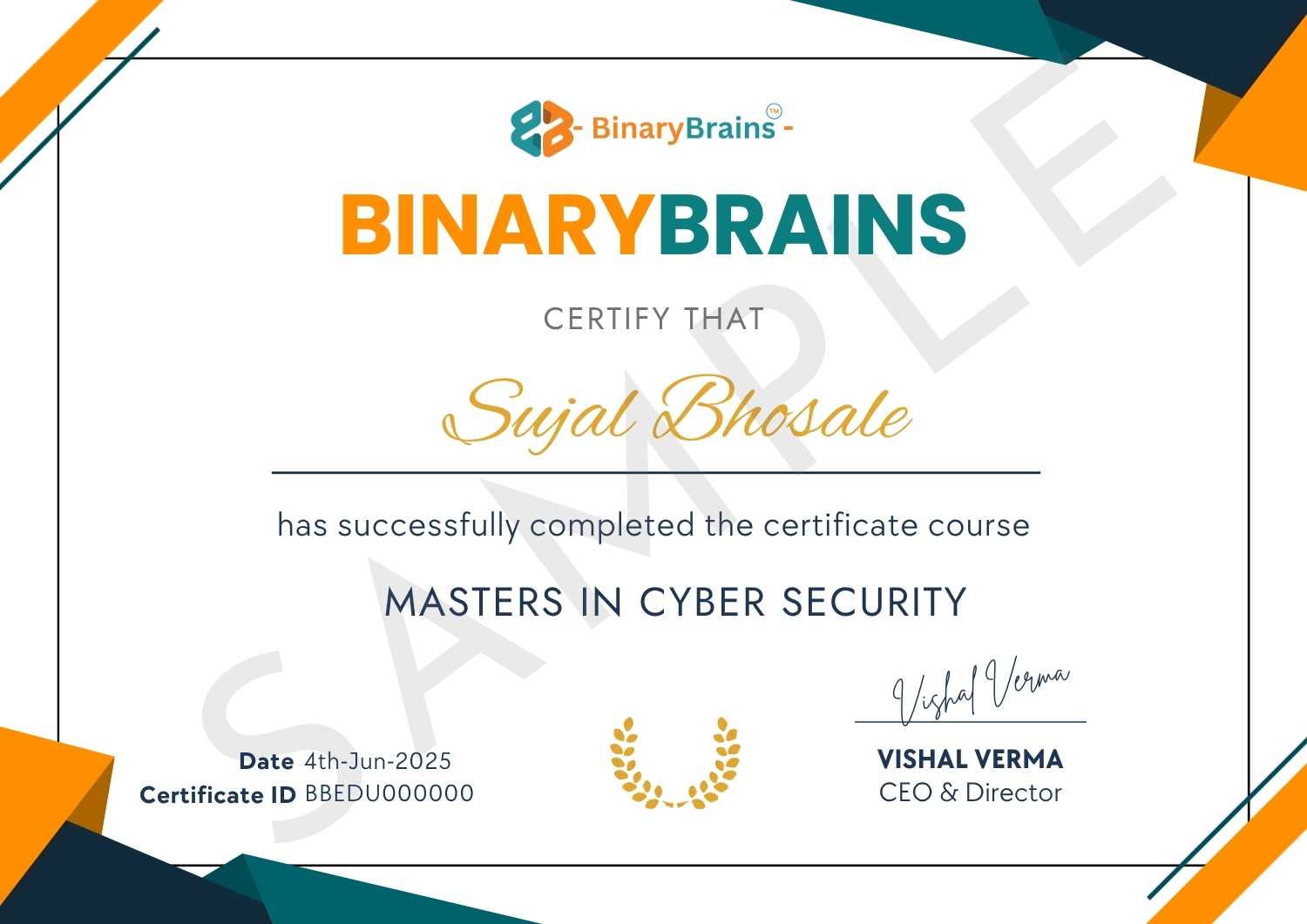
  • Validates real-world pen-testing expertise with employers
  • Enhances professional credibility with IT employers globally
  • Showcases SOC, Pen-Testing, Red Team, Infosec & Ethical Hacking proficiency
  • Signed by CEO & Director — BBEDU verifiable series
  • Perfect for new roles, promotions or strengthening your resume
certificate
BOOK FREE COUNSELING

Book Your Free Cybersecurity Career Counseling Session

Speak with our career advisor and understand exactly what's right for you.

  • Best cybersecurity career path for your background & goals
  • Course structure, duration and what each module covers
  • Fees, batch dates and available modes (online / classroom)
  • Placement readiness process and how we support you till hired
  • Certification paths — CEH, OSCP, CompTIA Security+ & more
Build Your Future with Skills the Cyber Security Industry Demands. — Free Session
Response within same business day
🔒 100% private. No spam. No obligations.
GOT QUESTIONS?

Cyber Security Course FAQs

Everything you need to know about the Masters in Cyber Security program — eligibility, curriculum, placement, fees, and more.

01
Is this course suitable for freshers with no cybersecurity experience?

Yes. The program starts with a Cybersecurity Readiness Bootcamp (Phase 0) and a structured Foundation Phase before moving into advanced topics. No prior security experience is required — just curiosity and commitment.

02
Do I need prior coding experience to learn Cybersecurity?

Not at all! Our curriculum starts from zero. While basic scripting (Shell, Python) is taught, this course doesn’t require you to be a programmer. We start from foundational concepts in Python, Linux, and Networking, CEH, gradually building up to advanced Cybersecurity concepts with real lab projects and industry tools like burp suite, wireshark, wazuh, kali linux and many more.

03
Will I get real hands-on practice?
Absolutely. Every module includes live labs, real tools and hands-on exercises. The capstone is a Proxmox-hosted enterprise cyber range with 21 real vulnerability classes across 5 network segments — this is genuine red/blue team simulation, not a virtual quiz.
04
Which roles can I apply for after completing this program?
Ethical Hacker, VAPT Engineer, SOC Analyst (L1/L2/L3), Security Analyst, Cloud Security Associate, Incident Response Analyst, Red Team Operator, GRC/InfoSec Analyst, Threat Intelligence Analyst and Cybersecurity Engineer. Salary ranges from ₹3–22 LPA depending on role and company.
05
What kind of placement support do you provide, and is there a job guarantee?

We provide a structured 100% placement assistance program including:

  • Resume & LinkedIn profile optimizationg
  • Mock interviews & technical assessments
  • Referrals to hiring partners and offer negotiation support
  • Weekly job updates & direct recruiter connects
  • Mentorship from industry professionals
  • We stay with you until you receive a job offer.

    06
    What is the Cyber Range and why does it matter?
    The Cyber Range is a realistic enterprise attack-and-defence environment where students practise real cybersecurity workflows safely.
    07
    What is the course fee? Are EMI options and refunds available?

    We offer flexible payment options including:

    • One-time payment discounts

    • 0% EMI plans

    • Monthly instalment options

    Refund eligibility depends on our admission policy. Please connect with the admissions team for current offers.

    08
    Is the program offered online or offline? What are the class timings?

    We provide both online and classroom training options for students and working professionals.

    Weekday and weekend batches are available, with flexible timing options including morning, evening, and weekend schedules.

    09
    Can a non-IT graduate or career changer enrol in this program?

    Yes. Career changers from non-IT backgrounds can successfully transition into Cybersecurity roles through our structured foundational training.

    We start from basics including Linux, Python, Networking, CEH and Cloud fundamentals before moving into advanced Cyber Security tools & concepts with real labs and projectcs.

    10
    What career opportunities can I expect after completing this program?

    The Master Program In Cyber Security opens doors to high-demand job roles such as:

  • Ethical Hacker
  • SOC Analyst
  • Security Analyst
  • VAPT Engineer
  • Incident Response Analyst
  • Threat Intel Analyst
  • InfoSec Associate
  • Cybersecurity Engineer
  • You will be trained to work with real-world tools, making you job-ready for roles in top MNCs and startups hiring for cyber securituy roles.

    Still have questions?

    Our admissions counsellors are happy to walk you through any details over a quick call.

    Start Your Cybersecurity Career with Real Skills

    Don't just learn cybersecurity theory. Practice how real attacks happen, how security teams detect them, and how professionals respond — in an enterprise cyber range built for job-ready training.

    ✓ 460+ Hours Training ✓ Enterprise Cyber Range ✓ Placement Support ✓ Live Instructor-Led
    📞
    +91-72497 56356 Mon–Sat, 9AM–7PM
    ✉️
    info@binarybrains.co Reply within 2 hours
    📍
    Pune, Maharashtra Online · Offline · Hybrid

    Start Your Cyber Security Journey
    Fill in your details — a career advisor calls within 24 hours.

    🔒 Your data is safe. No spam, ever.

     Download Full Syllabus
    Download the complete program brochure with curriculum, tools, projects, certifications, internship details, placement support, and fee structure.

    🔒 Your data is safe. No spam, ever.

    Enquire About No-Cost EMI
    Get details about No-Cost EMI, monthly installments, bank eligibility, and payment options.

    🔒 Your data is safe. No spam, ever.

    Enquire About the Internship
    Get details about internship fees, duration, live projects and mentor support. 

    🔒 Your data is safe. No spam, ever.
    Please confirm your details