

Introduction
In today’s rapidly evolving IT landscape, businesses are continuously adopting modern technologies to deliver software faster and more efficiently. This shift has created massive demand for skilled professionals who can manage development and operations together. A masters in devops is designed to bridge this gap by equipping learners with the right combination of technical skills, tools, and real-world experience. Whether you are a fresher, IT professional, or someone looking to switch careers, enrolling in a masters in devops course with AWS can open doors to high-paying job opportunities. This comprehensive guide will help you understand everything about pursuing a masters in devops, including its benefits, curriculum, career scope, and why AWS plays a crucial role in this field.
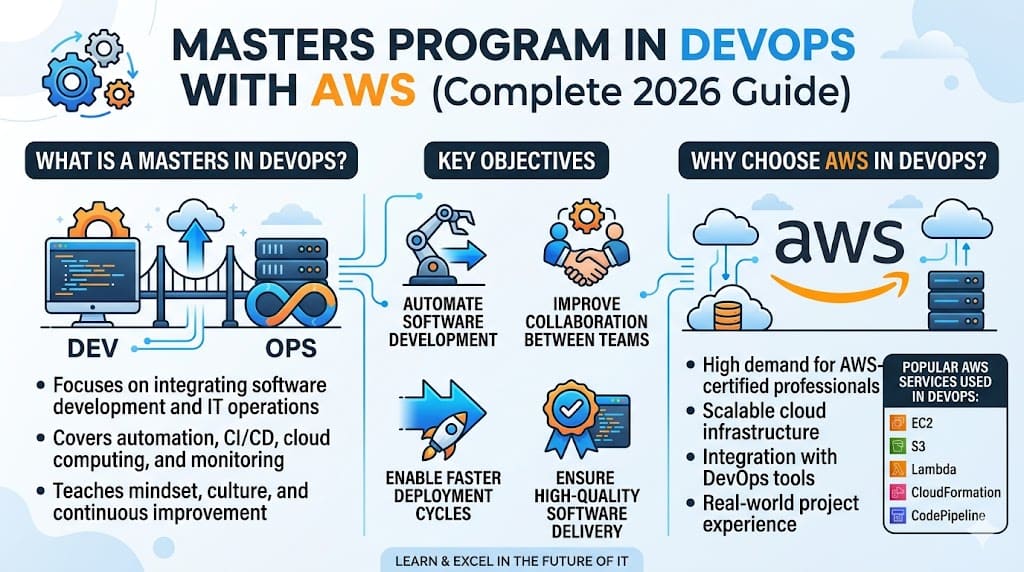
What is a Masters in devops?
A devops is an advanced training program that focuses on integrating software development (Dev) and IT operations (Ops). It helps learners understand automation, continuous integration, continuous deployment, cloud computing, and monitoring.
Key Objectives:
● Automate software development processes
● Improve collaboration between teams
● Enable faster deployment cycles
● Ensure high-quality software delivery
A devops is not just about tools—it’s about mindset, culture, and continuous improvement.
Why Choose AWS in DevOps?
Amazon Web Services (AWS) is the world’s leading cloud platform. Combining AWS with a devops program gives you a competitive edge.
Benefits of Learning
● High demand for AWS-certified professionals
● Scalable cloud infrastructure
● Integration with DevOps tools
● Real-world project experience
Popular AWS Services Used in DevOps:
● EC2 (Virtual Servers)
● S3 (Storage)
● Lambda (Serverless Computing)
● CloudFormation (Infrastructure as Code)
● CodePipeline (CI/CD)
A devops program that includes AWS prepares you for industry-level challenges.
Key Skills You Will Learn in a Masters in devops
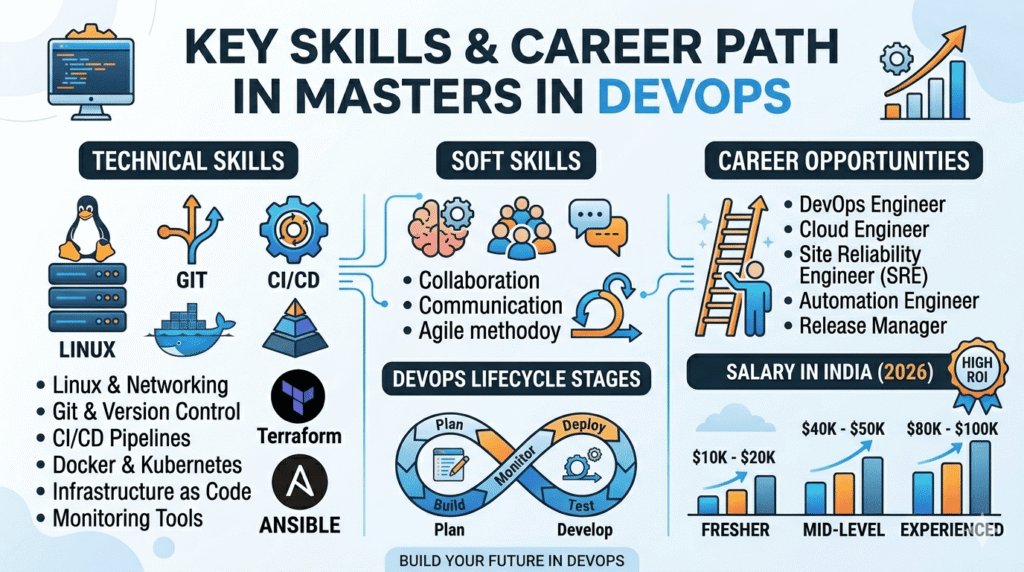
A well-structured devops program covers both technical and soft skills:
Technical Skills:
● Linux & Networking
● Git & Version Control
● CI/CD Pipelines
● Docker & Kubernetes
● Infrastructure as Code (Terraform, Ansible)
● Monitoring Tools (Prometheus, Grafana)
Soft Skills:
● Problem-solving
● Collaboration
● Communication
● Agile methodology
Mastering these skills through a devops ensures job readiness.
DevOps Lifecycle Explained
The DevOps lifecycle is an essential part of any devops curriculum.
Stages:
1. Planning – Requirement gathering
2. Development – Writing code
3. Building – Compiling code
4. Testing – Quality assurance
5. Deployment – Releasing applications
6. Monitoring – Performance tracking
Each stage is automated using tools taught in a devops program.
Tools Covered in a Masters in devops
A strong devops course includes hands-on training in tools:
● Git & GitHub
● Jenkins
● Docker
● Kubernetes
● Terraform
● Ansible
● Nagios / Prometheus
These tools are essential for real-world DevOps projects.
Career Opportunities After Course
Completing a devops opens up multiple job roles:
Job Roles:
● DevOps Engineer
● Cloud Engineer
● Site Reliability Engineer (SRE)
● Automation Engineer
● Release Manager
Salary in India (2026):
● Freshers: ₹4–8 LPA
● Mid-level: ₹10–18 LPA
● Experienced: ₹20+ LPA
A devops is one of the highest ROI courses in IT today.
Who Should Enroll in a Masters in devops?
A masters program in devops is suitable for:
● Students after 12th or graduation
● IT professionals
● System administrators
● Developers
● Career switchers
No matter your background, a masters in devops can transform your career.
Advantages of a Masters program in devops
Here’s why choosing a masters program in devops is a smart decision:
● High demand in the job market
● Attractive salary packages
● Global career opportunities
● Hands-on project experience
● Industry-recognized certifications
Real-World Projects in DevOps Training
A practical masters in devops includes projects like:
● CI/CD pipeline setup
● Deploying apps on AWS
● Containerization using Docker
● Kubernetes cluster management
● Infrastructure automation
Projects help you gain confidence and real experience.
DevOps Certifications to Boost Your Career
After completing a masters in devops, you can pursue certifications:
● AWS Certified DevOps Engineer
● Certified Kubernetes Administrator (CKA)
● Docker Certified Associate
● HashiCorp Terraform Certification
Certifications enhance your job profile after a masters in devops.
How to Choose the Best Masters in devops
Before enrolling in a masters in devops, consider:
● Course curriculum
● Trainer experience
● Hands-on projects
● Placement support
● Certification opportunities
Choosing the right masters in devops program is crucial for success.
Future of DevOps with AWS
The future of masters in devops is very promising due to:
● Cloud adoption growth
● AI integration
● Automation demand
● Faster software delivery needs
Companies are actively hiring professionals with devops skills.
Why Choose BinaryBrains ?
BinaryBrains offers industry-focused masters in devops training with:
● Expert trainers
● Live projects
● AWS integration
● Placement assistance
● Updated curriculum (2026)
This makes BinaryBrains a great choice for pursuing a masters program in devops.
Conclusion
A devops with AWS is one of the best career investments in 2026. It equips you with in-demand skills, practical knowledge, and industry exposure needed to succeed in the IT world. From automation to cloud computing, the program prepares you for high-paying roles and long-term growth. If you want to build a future-proof career, enrolling in a masters program in devops is the right step. Start your journey today and become a skilled DevOps professional ready to lead the digital transformation.
Comments are closed