

Introduction
The IT industry is evolving faster than ever before. Businesses today demand faster software delivery, better application performance, stronger security, and seamless customer experiences.
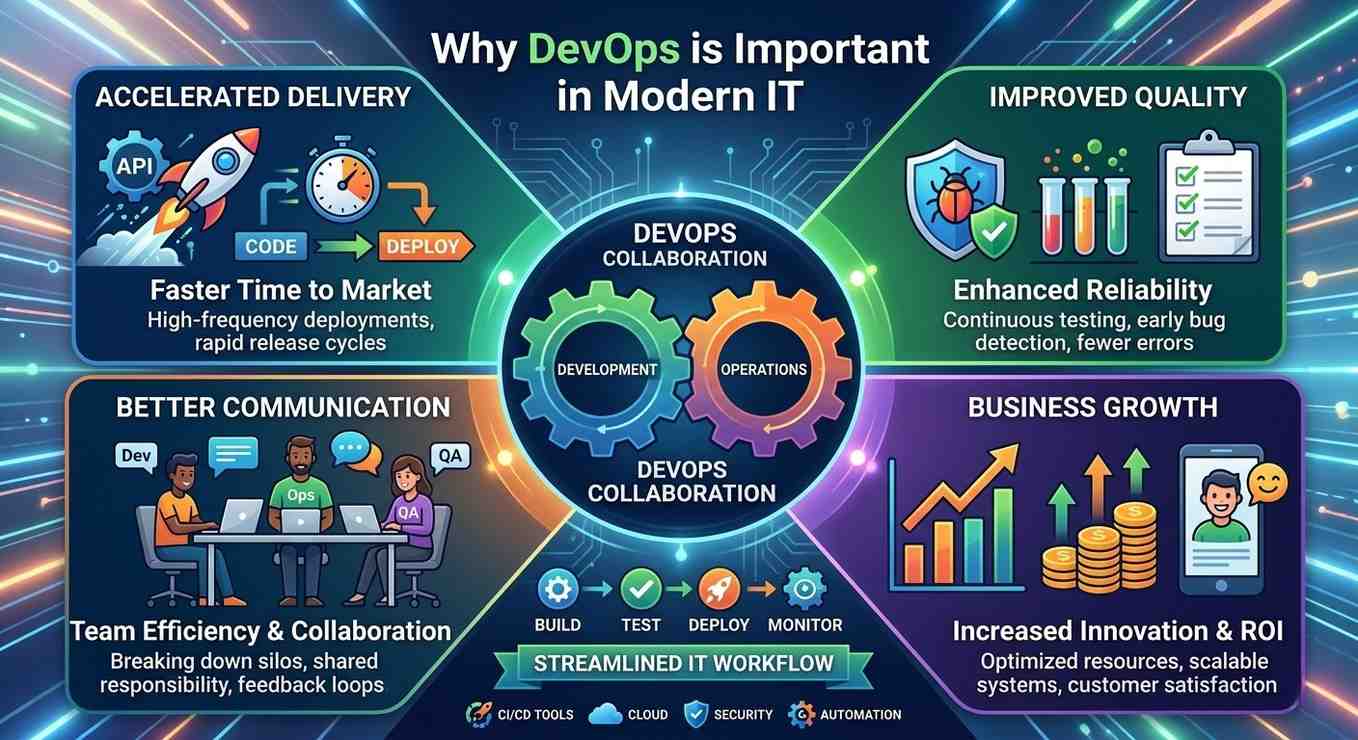
In this rapidly changing digital environment, understanding Why DevOps is Important has become essential for companies, developers, cloud engineers, and IT professionals.
Modern organizations no longer rely on traditional software development methods where development and operations teams work separately. Instead, companies are adopting DevOps practices to improve collaboration, automation, speed, and efficiency.
The importance of DevOps in modern IT continues to grow because businesses want quicker deployments, reduced downtime, better scalability, and continuous innovation.
From startups to global enterprises, DevOps is now considered one of the most valuable approaches in software development and cloud infrastructure management.
In this blog, we will explore Why DevOps is Important, its benefits, real-world applications, future opportunities, and why it has become the backbone of modern IT infrastructure.
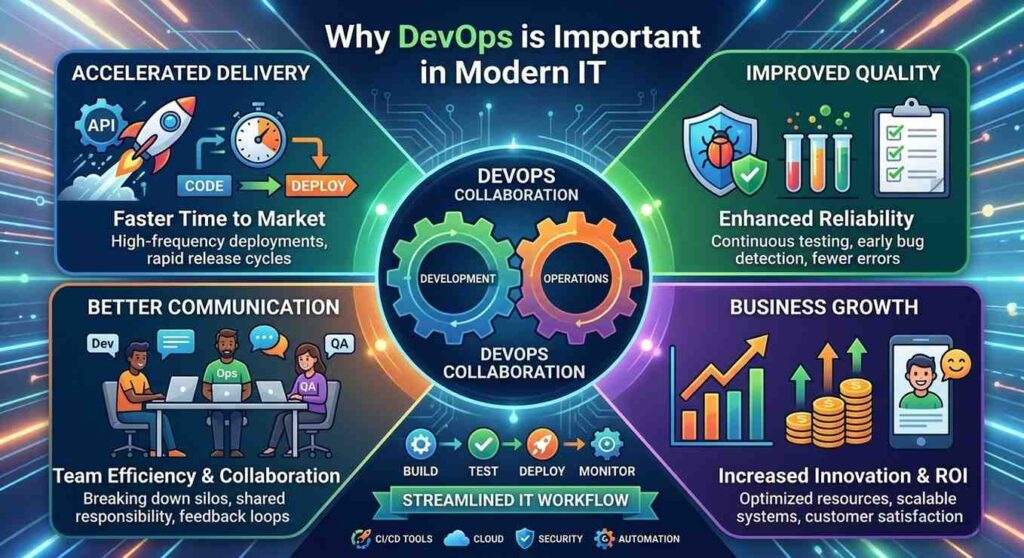
What is DevOps?
Before understanding Why DevOps is Important, it is necessary to understand what DevOps actually means.
DevOps is a combination of:
- Development (Dev)
- Operations (Ops)
It is a culture, methodology, and set of practices that helps software development and IT operations teams work together efficiently.
The main goal of DevOps is to:
- Automate processes
- Improve collaboration
- Deliver software faster
- Reduce deployment failures
- Improve software quality
DevOps uses tools, automation, cloud computing, monitoring systems, and CI/CD pipelines to streamline software delivery.
Why DevOps is Important in Today’s IT Industry
Modern businesses cannot afford slow software delivery or unstable applications. Customers expect applications to work smoothly 24/7.
This is one of the biggest reasons Why DevOps is Important in modern IT environments.
DevOps helps organizations:
- Release updates faster
- Improve customer satisfaction
- Reduce operational costs
- Increase business efficiency
- Improve system reliability
Without automation and collaboration, companies struggle to compete in the digital world.
Faster Software Delivery
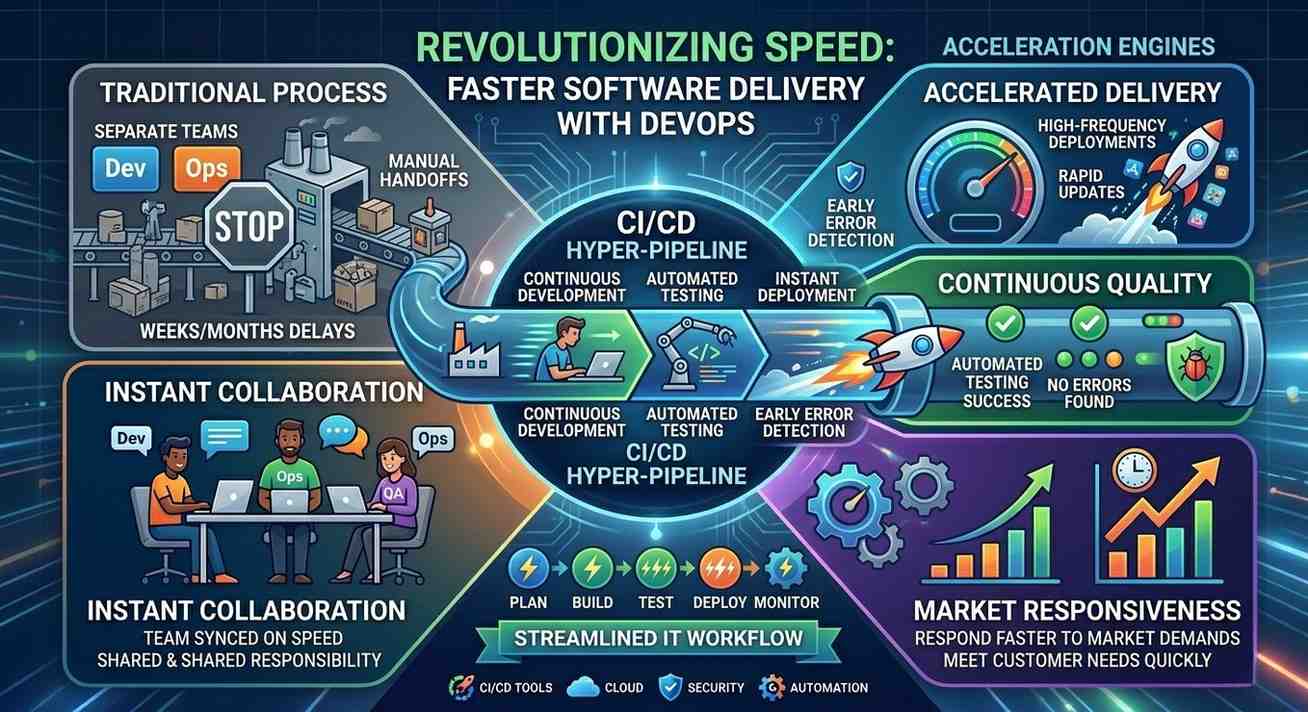
One of the biggest reasons explaining Why DevOps is Important is speed.
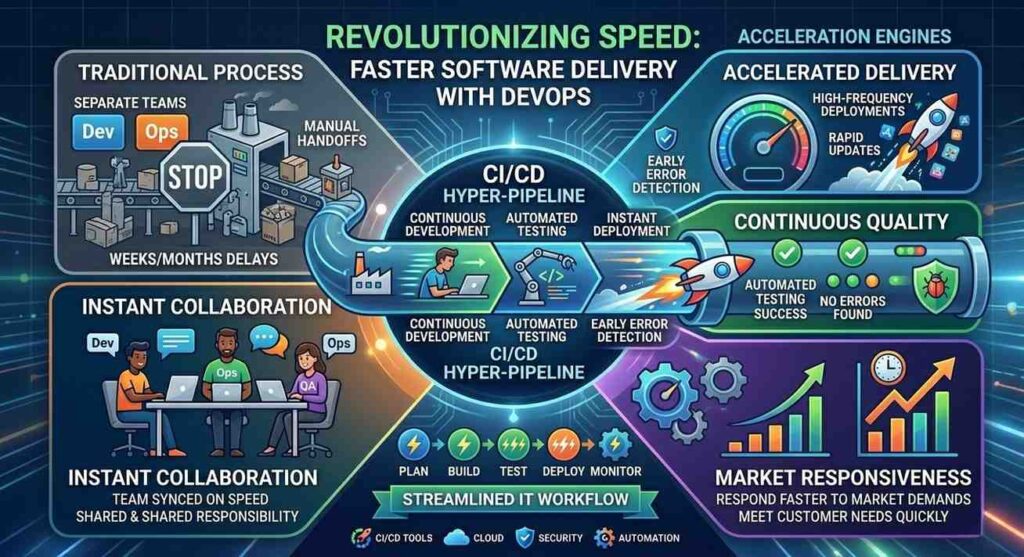
Traditional software development processes were slow because developers and operations teams worked separately. Deployments often took weeks or even months.
With DevOps:
- Development becomes continuous
- Testing becomes automated
- Deployments become faster
- Errors are detected early
CI/CD pipelines help companies release updates quickly and efficiently. This allows businesses to respond faster to market demands and customer needs.
Improved Collaboration Between Teams
Earlier, developers created software while operations teams handled deployment and infrastructure separately. This often caused communication gaps and delays.
Modern IT companies now understand Why DevOps is Important because it improves teamwork and collaboration.
DevOps creates:
- Shared responsibilities
- Better communication
- Faster issue resolution
- Improved workflow management
When teams collaborate effectively, productivity increases significantly.
Automation Reduces Manual Work
Automation is one of the strongest reasons behind Why DevOps is Important in cloud computing and software development.
DevOps automates many repetitive tasks such as:
- Code testing
- Software deployment
- Infrastructure setup
- Monitoring
- Security checks
Automation helps companies:
- Save time
- Reduce human errors
- Improve accuracy
- Increase operational efficiency
Tools like Jenkins, Docker, Kubernetes, Terraform, and Ansible make automation easier for DevOps teams.
Better Software Quality
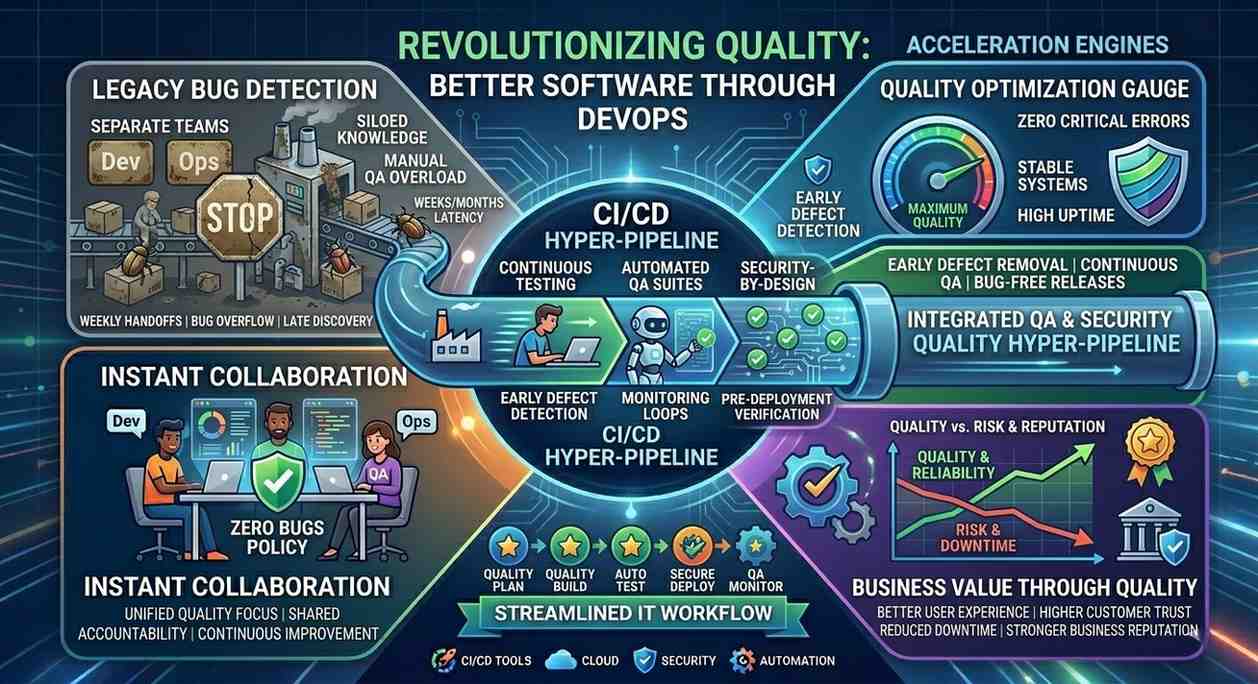
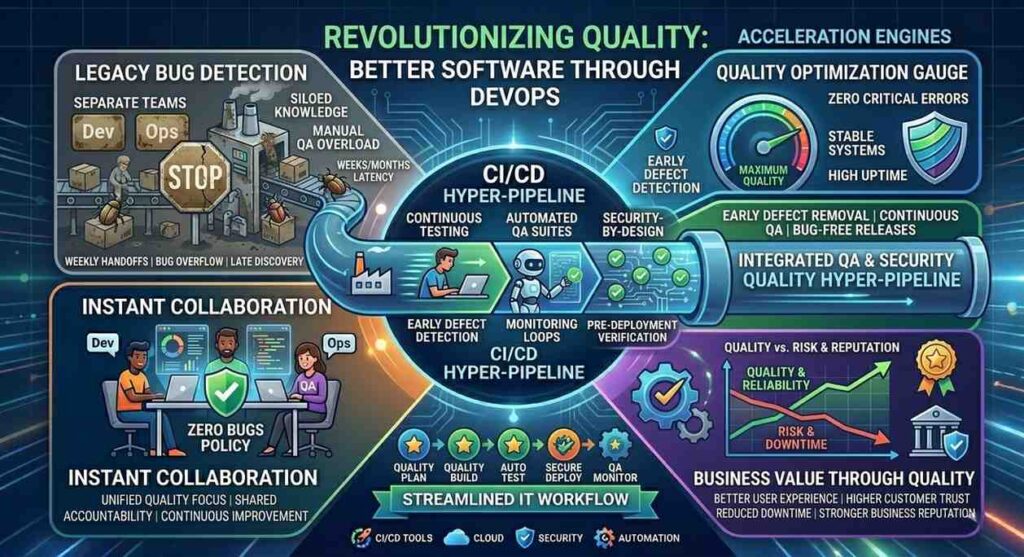
Another major reason explaining Why DevOps is Important is improved software quality.
DevOps improves quality through:
- Continuous testing
- Automated testing
- Early bug detection
- Monitoring systems
This ensures applications remain stable, secure, and reliable.
Better software quality leads to:
- Better user experience
- Higher customer trust
- Reduced downtime
- Stronger business reputation
Faster Problem Detection and Recovery
Modern businesses cannot afford long application downtime.
One major advantage showing Why DevOps is Important is faster recovery from failures.
DevOps monitoring tools help teams:
- Detect system failures quickly
- Monitor server performance
- Identify security threats
- Track application behavior
If any issue occurs, DevOps teams can respond immediately. This improves system reliability and business continuity.
Scalability in Cloud Computing
DevOps helps organizations:
- Scale infrastructure automatically
- Manage cloud resources efficiently
- Handle high traffic loads
- Improve application availability
Cloud platforms like AWS, Azure, and Google Cloud work closely with DevOps practices.
Enhanced Security with DevSecOps
DevSecOps helps organizations:
- Detect vulnerabilities early
- Improve compliance
- Automate security testing
- Protect cloud infrastructure
Security integration reduces risks and strengthens application protection.
Cost Optimization for Businesses
DevOps reduces costs through:
- Automation
- Faster deployments
- Reduced downtime
- Better resource utilization
- Efficient cloud management
When systems become automated and reliable, companies spend less on maintenance and recovery.
Real-World Example of DevOps in Modern IT
Without modern automation:
- Servers may crash
- Applications become slow
- Payments fail
- Customers leave the platform
With DevOps practices:
- Infrastructure scales automatically
- Monitoring systems detect unusual activity
- CI/CD pipelines deliver quick fixes
- Cloud resources adjust instantly
This demonstrates practically Why DevOps is Important for businesses handling large-scale digital operations.
Industries Using DevOps
Banking and Finance
Banks use DevOps for secure digital banking applications and faster updates.
E-Commerce
Online shopping platforms use DevOps for scalability and uptime.
Healthcare
Healthcare systems use DevOps for secure patient data management.
Media and Entertainment
Streaming platforms use DevOps to deliver uninterrupted content.
IT and Software Companies
Software companies rely heavily on DevOps for rapid software delivery.
Popular DevOps Tools Used in Modern IT
Some popular tools include:
- Jenkins
- Docker
- Kubernetes
- GitHub Actions
- Terraform
- Ansible
- Prometheus
- Nagios
- GitLab CI/CD
These tools automate software development and infrastructure management.
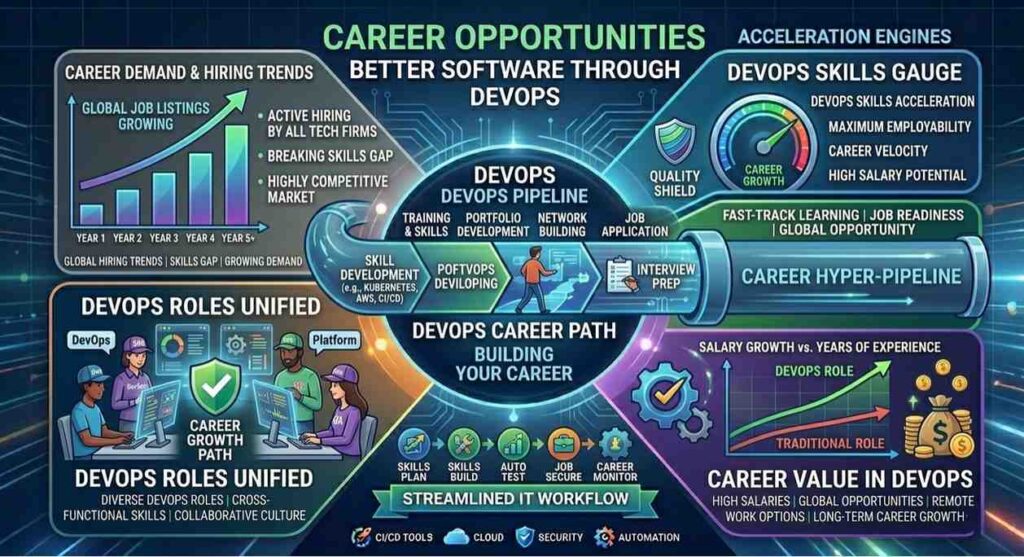
Career Opportunities in DevOps
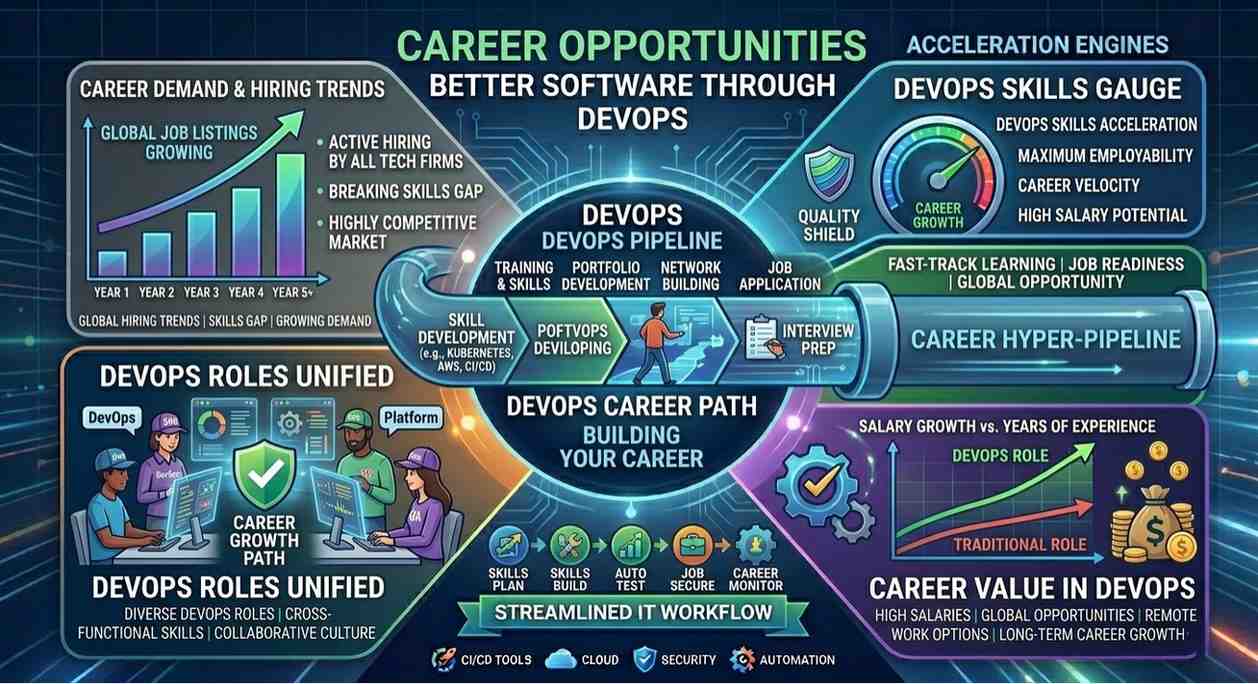
Companies are actively hiring:
- DevOps Engineers
- Cloud Engineers
- Site Reliability Engineers
- DevSecOps Engineers
- Platform Engineers
- Automation Engineers
These careers offer:
- High salaries
- Global opportunities
- Remote work options
- Long-term growth
Skills Required to Learn DevOps
Basic Skills
- Linux
- Networking
- Git & GitHub
- Python scripting
Intermediate Skills
- Docker
- Kubernetes
- Jenkins
- CI/CD pipelines
Advanced Skills
- AWS or Azure
- Infrastructure as Code
- Monitoring tools
- Security automation
Future of DevOps in Modern IT
Modern IT companies are now integrating:
- Artificial Intelligence
- Machine Learning
- Predictive monitoring
- Intelligent automation
Future trends include:
- AIOps
- GitOps
- MLOps
- Serverless computing
- Automated cloud management
Why Students Should Learn DevOps
Students entering the IT industry should seriously consider learning DevOps because:
- Cloud computing demand is increasing
- Automation is becoming essential
- Companies prefer practical skills
- DevOps offers strong career growth
Learn DevOps with BinaryBrains
At BinaryBrains, students gain industry-focused training in DevOps, Cloud Computing, AWS, Azure, Kubernetes, and Automation through hands-on practical learning and real-world projects.
Our goal is to help students build job-ready technical skills that match current IT industry demands and prepare them for successful careers in modern cloud and DevOps technologies.
Why Choose BinaryBrains?
✅ Industry-Experienced Trainers
✅ Hands-On Practical Learning
✅ Real-World Projects & Case Studies
✅ AWS, Azure, Docker & Kubernetes Training
✅ Interview Preparation & Career Guidance
✅ Flexible Learning Options
✅ Certification-Oriented Training
Take the Next Step in Your DevOps Career
Whether you’re a student, fresher, working professional, or career changer, BinaryBrains provides the skills and practical experience needed to succeed in today’s competitive IT industry.
🚀 Explore Our DevOps Training Program
👉 https://binarybrains.co/devops-courses-certification/
🎓 Book Your Free Demo Class
👉 https://binarybrains.co/book-a-demo-class/
📞 Call / WhatsApp: +91-7249756356
Start Your DevOps Journey Today
Master the tools and technologies that leading companies are actively hiring for and build a future-ready career with BinaryBrains.
Conclusion
The digital world depends heavily on speed, automation, scalability, and reliability. This is why DevOps has become a critical component of modern IT infrastructure.
DevOps helps businesses:
- Deliver software faster
- Improve collaboration
- Automate workflows
- Enhance security
- Reduce downtime
- Scale cloud infrastructure
From startups to enterprise organizations, DevOps is transforming the way technology operates. As cloud computing, AI, and automation continue growing, DevOps will remain one of the most important domains in the IT industry.
For students and professionals looking to build future-proof careers, learning DevOps can open doors to exciting global opportunities.
Why DevOps is Important will become even more evident as organizations continue adopting cloud-native technologies, automation, and intelligent infrastructure management.
The future of IT belongs to intelligent automation, cloud infrastructure, and continuous innovation—and DevOps stands at the center of this transformation.
Comments are closed